SINGAPORE (Dow Jones)--Barclays Wealth, the wealth management division of Barclays PLC (BARC.LN), said Monday it has appointed three new bankers from UBS AG (UBS) in senior positions, to strengthen its private banking team for South Asians.
Vikram Malhotra, who joins Barclays Wealth as managing director and head of South Asia operations, will manage a team of Hong Kong and Singapore-based bankers who will provide wealth management and advisory solutions to South Asians in Asia Pacific, Barclays said in a statement.
Prior to joining Barclays Wealth, Malhotra was the managing director and country team head for India International Asia at UBS.
Also joining Barclays Wealth from UBS are Jagdish Kale and Rohit Nanani. Both will taking on the positions of directors at Barclays Wealth and will be based in Singapore, the statement said.
'As we continue to build our presence in Asia Pacific, adding high-calibre senior bankers is crucial to meeting the complex needs of our sophisticated private banking clients,' Didier Von Daeniken, chief executive of Barclays Wealth Asia Pacific, said in the statement.
Showing posts with label UBS. Show all posts
Showing posts with label UBS. Show all posts
Wednesday, February 10, 2010

More On Compensation - UBS
The London Evening Standard reports that UBS is to raise its 2009 bonus pool by 34% to $2.7bn. CEO Oswald Gruebel confirmed that: 'Our top performers are paid to stay, as we'd hate to lose them'.
UBS Claws Back $282 Million of Bonuses After Posting 2009 Loss
Feb. 10 (Bloomberg) -- UBS AG’s loss in 2009 will trigger the bank’s bonus claw back mechanism for the first time, depriving senior bankers of 300 million Swiss francs ($282 million) of deferred pay they were due to receive this year.
The Swiss bank introduced last year a plan that would pay 900 million francs to managing directors, executive directors and directors in equal parts in 2010, 2011 and 2012. The lender yesterday posted a 2.74 billion-franc loss for 2009, compared with a loss of 21.3 billion francs for the previous year.
“The critical condition, a net profit for 2009 according to International Financial Reporting Standards, was not met,” Chief Executive Officer Oswald Gruebel said in a memo to employees dated yesterday.
The Swiss bank introduced last year a plan that would pay 900 million francs to managing directors, executive directors and directors in equal parts in 2010, 2011 and 2012. The lender yesterday posted a 2.74 billion-franc loss for 2009, compared with a loss of 21.3 billion francs for the previous year.
“The critical condition, a net profit for 2009 according to International Financial Reporting Standards, was not met,” Chief Executive Officer Oswald Gruebel said in a memo to employees dated yesterday.
Tuesday, February 9, 2010
UBS Q4 Results +CHF1.2Bio

UBS reports a fourth quarter profit of CHF 1,205 million
Fourth quarter 2009 results
Net profit attributable to UBS shareholders was CHF 1,205 million, with all business divisions reporting a pre-tax profit in fourth quarter 2009
Improvement compared with the third quarter due to lower costs, lower own credit charges and a tax credit
Greater efficiency and cost control
Cost reduction and efficiency programs initiated in early 2009 have led to a sharp reduction in fixed costs to CHF 20.2 billion in 2009, broadly in line with the CHF 20 billion target set for 2010
Headcount reduced by 16% to 65,233 during the year, broadly in line with the 2010 target of 65,000
Financial strength
Year-end BIS tier 1 capital ratio of 15.4% compared with 11.0% on 31 December 2008; FINMA leverage ratio of 3.9% in fourth quarter 2009 compared with 2.5% in fourth quarter 2008
Further reductions in risk exposures and balance sheet: assets1 down 21% year-on-year to CHF 919 billion and total risk-weighted assets down 32% year-on-year to CHF 207 billion on 31 December 2009
Net new money and invested assets
Net new money outflows in fourth quarter 2009 were CHF 33.2 billion for Wealth Management & Swiss Bank, CHF 12.0 billion for Wealth Management Americas, and CHF 11.0 billion for Global Asset Management
Invested assets were CHF 2,233 billion on 31 December 2009, up 3% year-on-year and down 1% compared with the prior quarter-end
CEO comment and outlook
Group CEO Grübel says UBS is delivering on its plan for a new UBS, as demonstrated by its return to profitability and strengthened capitalization
Addressing the causes of net new money outflows remains a main priority – management is confident that reputation will be restored with tangible results
Effects of the progress made in improving efficiency, reducing risk and rebuilding and refocusing businesses are expected to be felt in the coming quarters
Full-year 2009 results
Net loss attributable to shareholders decreased to CHF 2,736 million for full-year 2009 from CHF 21,292 million in 2008. Adjusted for the items below, the underlying pre-tax profit for 2009 was CHF 1.4 billion. In 2009, the biggest negative accounting impact came from losses on own credit on financial liabilities designated at fair value. These own credit losses were driven by the improved perception of UBS's creditworthiness during 2009, which was a positive development but led to a net charge of CHF 2.0 billion. The other items were a loss in relation to the closing of the UBS Pactual sale (CHF 1.4 billion), restructuring charges (CHF 0.8 billion) and a gain on the mandatory convertible notes formerly held by the Swiss Confederation and converted in August 2009 (CHF 0.3 billion).
Swiss bank UBS returns to profit, still struggles
ZURICH (AFP) – Troubled Swiss bank UBS said Tuesday it had jumped back into quarterly profit for the first time in more than a year even though it was still grappling with a damaging loss of client confidence.
The bank, severely hit by the financial crisis as well as international pressure on tax evasion and Swiss banking secrecy, posted a 1.20-billion-franc profit (1.12 billion dollars, 821 million euros) in the fourth quarter of 2009.
It was the first time that Switzerland's banking flagship had reported a profit since the third quarter of 2008, helping to cut its 2009 net loss to 2.73 billion francs from 21.29 billion francs in 2008.
The earnings figures outstripped analyst expectations but investors were unimpressed as unsettled clients continued to withdraw their funds.
The drop in UBS shares accelerated during the day and they were down 5.7 percent in afternoon trading in Zurich.
Chief executive Oswald Gruebel said the reputational damage caused by the fallout from the global credit crisis and legal pressures over tax issues, especially in the United States, 'should not be underestimated.'
On Tuesday, UBS reported that net money outflows from its international wealth management unit more than doubled from the previous quarter.
Net new money outflows totalled 56.2 billion Swiss francs in the fourth quarter, despite an increase in assets from Asia. The outflows from its global wealth management unit rose to 27.3 billion francs from 12.9 billion francs.
The bank, severely hit by the financial crisis as well as international pressure on tax evasion and Swiss banking secrecy, posted a 1.20-billion-franc profit (1.12 billion dollars, 821 million euros) in the fourth quarter of 2009.
It was the first time that Switzerland's banking flagship had reported a profit since the third quarter of 2008, helping to cut its 2009 net loss to 2.73 billion francs from 21.29 billion francs in 2008.
The earnings figures outstripped analyst expectations but investors were unimpressed as unsettled clients continued to withdraw their funds.
The drop in UBS shares accelerated during the day and they were down 5.7 percent in afternoon trading in Zurich.
Chief executive Oswald Gruebel said the reputational damage caused by the fallout from the global credit crisis and legal pressures over tax issues, especially in the United States, 'should not be underestimated.'
On Tuesday, UBS reported that net money outflows from its international wealth management unit more than doubled from the previous quarter.
Net new money outflows totalled 56.2 billion Swiss francs in the fourth quarter, despite an increase in assets from Asia. The outflows from its global wealth management unit rose to 27.3 billion francs from 12.9 billion francs.
Friday, February 5, 2010
UBS to reorganize struggling U.S. wealth management
NEW YORK/ZURICH (Reuters) - Troubled Swiss bank UBS, which has been battered by a U.S. tax evasion probe, is reorganizing its U.S. wealth management division in an attempt to stem outflows.
The Swiss bank, the world's second largest wealth manager, said on Friday the recently appointed heads of its wealth management unit, Robert McCann and Robert Mulholland, had outlined broad plans for a restructuring and management reshuffle.
News of the changes drew initial skepticism from the market. They are part of a months-long process McCann has undertaken to revive an 8,000-strong brokerage force caught in the firing line of the U.S. Internal Revenue Service investigation.
"They are implementing a plan that was effectively announced when McCann presented at the investor conference in November. He said then he needed ... to turn things around," said Kepler Equities analyst Dirk Becker.
McCann, who joined UBS as head of the Americas wealth management unit in October 2009, said then he would unveil his strategy to create a nimbler business early in 2010.
The Swiss bank, the world's second largest wealth manager, said on Friday the recently appointed heads of its wealth management unit, Robert McCann and Robert Mulholland, had outlined broad plans for a restructuring and management reshuffle.
News of the changes drew initial skepticism from the market. They are part of a months-long process McCann has undertaken to revive an 8,000-strong brokerage force caught in the firing line of the U.S. Internal Revenue Service investigation.
"They are implementing a plan that was effectively announced when McCann presented at the investor conference in November. He said then he needed ... to turn things around," said Kepler Equities analyst Dirk Becker.
McCann, who joined UBS as head of the Americas wealth management unit in October 2009, said then he would unveil his strategy to create a nimbler business early in 2010.
Monday, January 25, 2010
UBS Appoints Misra, Psyllidis as Debt Unit Co-Heads - Bloomberg
UBS AG, Switzerland’s biggest bank by assets, appointed Rajeev Misra and Dimitri Psyllidis as co- heads of fixed-income, currencies and commodities.
Misra, 47, and Psyllidis, 43, take on the roles in addition to their responsibilities as global heads of credit and macro, respectively, the Zurich-based bank said in an e-mailed statement today.
Carsten Kengeter, 42, the co-head of UBS’s investment bank, will relinquish his role as co-head of FICC with Jeffrey Mayer, 50, who will take on the new position of executive chairman of FICC, the bank said. UBS is shuffling leadership of the fixed- income unit at a time when the business may be facing lower revenue prospects, according to analysts.
UBS also said it hired Neal Shear, 55, as global head of securities, to be based in Stamford, Connecticut, and Roberto Hoornweg, 41, as the global head of securities distribution, to be based in London.
Shear left New York-based Morgan Stanley in March 2008 after then Chief Executive Officer John Mack demoted him in November 2007 because of bad trades that resulted in the first quarterly loss as a publicly-traded company. Thomas Daula, the former chief risk officer at Morgan Stanley, who also left amid the management reshuffle, joined UBS in June 2008 to take that position at its investment bank.
Hoornweg also worked previously at Morgan Stanley, most recently as head of global interest rates, credit and currencies. He left in July 2009, when the firm hired Jack DiMaio to replace him.
Shear and Hoornweg will be responsible for aligning the equities and debt units and bringing their distribution teams more closely together.
Misra, 47, and Psyllidis, 43, take on the roles in addition to their responsibilities as global heads of credit and macro, respectively, the Zurich-based bank said in an e-mailed statement today.
Carsten Kengeter, 42, the co-head of UBS’s investment bank, will relinquish his role as co-head of FICC with Jeffrey Mayer, 50, who will take on the new position of executive chairman of FICC, the bank said. UBS is shuffling leadership of the fixed- income unit at a time when the business may be facing lower revenue prospects, according to analysts.
UBS also said it hired Neal Shear, 55, as global head of securities, to be based in Stamford, Connecticut, and Roberto Hoornweg, 41, as the global head of securities distribution, to be based in London.
Shear left New York-based Morgan Stanley in March 2008 after then Chief Executive Officer John Mack demoted him in November 2007 because of bad trades that resulted in the first quarterly loss as a publicly-traded company. Thomas Daula, the former chief risk officer at Morgan Stanley, who also left amid the management reshuffle, joined UBS in June 2008 to take that position at its investment bank.
Hoornweg also worked previously at Morgan Stanley, most recently as head of global interest rates, credit and currencies. He left in July 2009, when the firm hired Jack DiMaio to replace him.
Shear and Hoornweg will be responsible for aligning the equities and debt units and bringing their distribution teams more closely together.
Tuesday, January 12, 2010
UBS CEO Oswald Gruebel has written a 'Panditesque' memo to his staff, attempting to rally the troops for the good fight ahead.
The memo:
'Dear colleagues,
I hope the New Year brings you health, optimism and personal happiness. Exciting times lie ahead of us. Our vision is to make UBS the choice of clients worldwide. It’s time now for us to turn that vision into reality.
Our business is built on strong relationships based on mutual respect for our clients, our shareholders and our business environment in general. Close, strong relationships are essential to understanding what motivates our clients, recognizing their needs and offering them the right solutions. This is what the new UBS must stand for. If we accomplish this, we will continually create added value.
On Investor Day in November, we made it clear that we intend to build on our strengths. We are going to concentrate on wealthy private investors throughout the world, international and Swiss corporate and institutional clients, and the Swiss domestic business. In addition, we want to be a leading bank in growth markets. UBS cannot be everything to everyone everywhere. But we can be among the best in those areas where we’ve placed our priorities. We will rigorously adhere to our strategic principles of reputation, integration and execution. It’s now up to us to go forward and diligently implement this strategy.
As you all know, our reputation, along with trust in the new UBS, is our most valuable asset. For this reason, the Board of Directors and the Executive Board have established a Code of Business Conduct and Ethics. This code describes in detail the principles and regulations that we must abide by. What has happened over the past few years must no longer be possible. You will receive your copy of the code in the next few days.
Going forward, we will support our client advisors more systematically so that they have direct access to UBS’s entire range of products and services. This is the only way that we can make our services and expertise easily available to our clients. For this purpose, the new Investment Products Services (IPS) unit will bring together product experts from the business divisions whose knowledge extends from the development stage through sales support to execution. We will announce the details concerning IPS in the coming weeks. It will enable UBS to meet client needs more rapidly, directly and systematically so that the bank becomes an even stronger partner in every respect.
Doing our work to our utmost ability, executing client orders perfectly and delivering excellent client service must be our passion. This requires having the best-qualified management as well as experts in the right places. Our centralized Human Resources organization will contribute greatly in this regard, whether through our Business University, our compensation system or our succession planning.
Each and every one of you creates the new UBS identity through your actions. Every day you make many important decisions. You have the entrepreneurial freedom to do so, and you should use it.
The values that guide our efforts are truth, clarity and performance. Specifically, this means:
- We behave with respect and integrity. We are accurate, realistic and accountable. We always act fairly and abide by the law.
- We make it easy to do business with UBS. We are concise, precise and to the point. We are reliable and consistent.
- We always give our best. We will perform to the highest professional standards. We will lead the market through superior service and execution.
Our new identity must be spread throughout UBS and become second nature to us. I know that this won’t happen overnight. Starting immediately, however, we will begin measuring ourselves against these principles. Thus the identity of the new UBS must be visible and discernible as soon as possible. I am counting on your commitment.
All business division managers are to press ahead with implementing our identity in workshops, and we will delve deeper into the topic at the upcoming Managing Director conferences. Our values will have a direct impact on your daily business, and they will lead to further changes.
The quicker we put our principles and values into practice on a daily basis, the quicker we will see their positive influence on our business. Clients will reward our efforts with their trust, which will help boost asset inflows and expand our business. It is my firm conviction that in a competitive financial environment, the successful companies are those that provide clients with genuine service and performance. A lot of companies promise these values, but only a handful can deliver them in a disciplined and consistent manner. This gap between talk and execution offers us a major opportunity.
I would like to remind you of our immediate business priorities at the start of this year. In Wealth Management it is imperative that we stop the outflow of assets and increase the inflow. Although one-off effects such as tax amnesties are unavoidable, we ourselves must not give clients any reason to leave the bank. Our clients expect us to actively approach them and speak with them regularly. Where we are already doing this, we are acquiring new clients and winning back old ones more successfully. We need to see more of this.
In Investment Banking we have to raise our profitability considerably and concentrate on our client business. The restructuring of our fixed-income business is an urgent priority that we are currently working intensively on. I am happy to report that we are being sought out for many large, global transactions, which is highly motivating for us. In Asset Management our top priority is to generate consistently good gains for our clients. We have made significant progress in this area as well.
We have everything it takes to improve even more. To maximize this potential, we will change the way we operate and manage our business. Each of us must be open to this change and ready take on responsibility. No one has any reason to stand on the sidelines waiting.
Now let’s get to work and put our plans into action.
I’m looking forward to doing so and thank you for your effort and commitment.
Yours,
Oswald J. Grübel'
The memo:
'Dear colleagues,
I hope the New Year brings you health, optimism and personal happiness. Exciting times lie ahead of us. Our vision is to make UBS the choice of clients worldwide. It’s time now for us to turn that vision into reality.
Our business is built on strong relationships based on mutual respect for our clients, our shareholders and our business environment in general. Close, strong relationships are essential to understanding what motivates our clients, recognizing their needs and offering them the right solutions. This is what the new UBS must stand for. If we accomplish this, we will continually create added value.
On Investor Day in November, we made it clear that we intend to build on our strengths. We are going to concentrate on wealthy private investors throughout the world, international and Swiss corporate and institutional clients, and the Swiss domestic business. In addition, we want to be a leading bank in growth markets. UBS cannot be everything to everyone everywhere. But we can be among the best in those areas where we’ve placed our priorities. We will rigorously adhere to our strategic principles of reputation, integration and execution. It’s now up to us to go forward and diligently implement this strategy.
As you all know, our reputation, along with trust in the new UBS, is our most valuable asset. For this reason, the Board of Directors and the Executive Board have established a Code of Business Conduct and Ethics. This code describes in detail the principles and regulations that we must abide by. What has happened over the past few years must no longer be possible. You will receive your copy of the code in the next few days.
Going forward, we will support our client advisors more systematically so that they have direct access to UBS’s entire range of products and services. This is the only way that we can make our services and expertise easily available to our clients. For this purpose, the new Investment Products Services (IPS) unit will bring together product experts from the business divisions whose knowledge extends from the development stage through sales support to execution. We will announce the details concerning IPS in the coming weeks. It will enable UBS to meet client needs more rapidly, directly and systematically so that the bank becomes an even stronger partner in every respect.
Doing our work to our utmost ability, executing client orders perfectly and delivering excellent client service must be our passion. This requires having the best-qualified management as well as experts in the right places. Our centralized Human Resources organization will contribute greatly in this regard, whether through our Business University, our compensation system or our succession planning.
Each and every one of you creates the new UBS identity through your actions. Every day you make many important decisions. You have the entrepreneurial freedom to do so, and you should use it.
The values that guide our efforts are truth, clarity and performance. Specifically, this means:
- We behave with respect and integrity. We are accurate, realistic and accountable. We always act fairly and abide by the law.
- We make it easy to do business with UBS. We are concise, precise and to the point. We are reliable and consistent.
- We always give our best. We will perform to the highest professional standards. We will lead the market through superior service and execution.
Our new identity must be spread throughout UBS and become second nature to us. I know that this won’t happen overnight. Starting immediately, however, we will begin measuring ourselves against these principles. Thus the identity of the new UBS must be visible and discernible as soon as possible. I am counting on your commitment.
All business division managers are to press ahead with implementing our identity in workshops, and we will delve deeper into the topic at the upcoming Managing Director conferences. Our values will have a direct impact on your daily business, and they will lead to further changes.
The quicker we put our principles and values into practice on a daily basis, the quicker we will see their positive influence on our business. Clients will reward our efforts with their trust, which will help boost asset inflows and expand our business. It is my firm conviction that in a competitive financial environment, the successful companies are those that provide clients with genuine service and performance. A lot of companies promise these values, but only a handful can deliver them in a disciplined and consistent manner. This gap between talk and execution offers us a major opportunity.
I would like to remind you of our immediate business priorities at the start of this year. In Wealth Management it is imperative that we stop the outflow of assets and increase the inflow. Although one-off effects such as tax amnesties are unavoidable, we ourselves must not give clients any reason to leave the bank. Our clients expect us to actively approach them and speak with them regularly. Where we are already doing this, we are acquiring new clients and winning back old ones more successfully. We need to see more of this.
In Investment Banking we have to raise our profitability considerably and concentrate on our client business. The restructuring of our fixed-income business is an urgent priority that we are currently working intensively on. I am happy to report that we are being sought out for many large, global transactions, which is highly motivating for us. In Asset Management our top priority is to generate consistently good gains for our clients. We have made significant progress in this area as well.
We have everything it takes to improve even more. To maximize this potential, we will change the way we operate and manage our business. Each of us must be open to this change and ready take on responsibility. No one has any reason to stand on the sidelines waiting.
Now let’s get to work and put our plans into action.
I’m looking forward to doing so and thank you for your effort and commitment.
Yours,
Oswald J. Grübel'
Tuesday, November 17, 2009
UBS boss sets out turnaround plan
The chief executive of Swiss bank UBS says he wants the firm to make profits of $15bn in three to five years' time.
Oswald Gruebel is in charge of turning the bank around after record losses from the sub-prime crisis and a tax row with the US. He said the plan was a 'revolution', adding 'if it was easy I would not be here'. Mr Gruebel was persuaded out of early retirement to join the bank. It was his first strategic presentation since he took over in February. He has already cut 7,500 jobs and sold the firm's Brazilian unit Pactual.
UBS was one of the banks hardest hit by the sub-prime crisis and was forced to write off $50bn in sub-prime related losses. That led to a record loss of $20.7bn last year.
Mr Gruebel said: 'There will be three guiding principles: reputation, integration, execution... we want to ensure that what has happened to UBS should not happen again.'
A dispute with the US government over taxes for wealthy American customers damaged UBS's reputation and it lost clients as a result. The new UBS will be 'one that performs to the highest standard and behaves with integrity and honesty,' Mr Gruebel said.
Analysts at Zuercher Kantonalbank welcomed the news. 'UBS has announced very ambitious goals that are significantly beyond our current estimates,' they said.
Tax deal
Separately, the Swiss Justice Department gave more details of its agreement with the US government to hand over information on 4,450 UBS customers. The names of Americans with more than 1 million Swiss francs ($980,000) in undeclared bank accounts at UBS between 2001 and 2008 will be handed over to US tax authorities. If there is evidence of 'fraudulent behaviour' the threshold is lowered to 250,000 Swiss francs. Anyone who earned an average of 100,000 Swiss francs a year for more than three years could also be on the list.
The corresponding amount in US dollars varies widely because the currency lost more than a third of its value against the Swiss franc during the period covered."
Oswald Gruebel is in charge of turning the bank around after record losses from the sub-prime crisis and a tax row with the US. He said the plan was a 'revolution', adding 'if it was easy I would not be here'. Mr Gruebel was persuaded out of early retirement to join the bank. It was his first strategic presentation since he took over in February. He has already cut 7,500 jobs and sold the firm's Brazilian unit Pactual.
UBS was one of the banks hardest hit by the sub-prime crisis and was forced to write off $50bn in sub-prime related losses. That led to a record loss of $20.7bn last year.
Mr Gruebel said: 'There will be three guiding principles: reputation, integration, execution... we want to ensure that what has happened to UBS should not happen again.'
A dispute with the US government over taxes for wealthy American customers damaged UBS's reputation and it lost clients as a result. The new UBS will be 'one that performs to the highest standard and behaves with integrity and honesty,' Mr Gruebel said.
Analysts at Zuercher Kantonalbank welcomed the news. 'UBS has announced very ambitious goals that are significantly beyond our current estimates,' they said.
Tax deal
Separately, the Swiss Justice Department gave more details of its agreement with the US government to hand over information on 4,450 UBS customers. The names of Americans with more than 1 million Swiss francs ($980,000) in undeclared bank accounts at UBS between 2001 and 2008 will be handed over to US tax authorities. If there is evidence of 'fraudulent behaviour' the threshold is lowered to 250,000 Swiss francs. Anyone who earned an average of 100,000 Swiss francs a year for more than three years could also be on the list.
The corresponding amount in US dollars varies widely because the currency lost more than a third of its value against the Swiss franc during the period covered."
Wednesday, November 4, 2009
UBS piles up losses, clients withdraw assets
ZURICH (AFP) - – Swiss banking giant UBS on Tuesday plunged into further losses during the third quarter as clients spooked by tax scrutiny withdrew billions of dollars of funds and assets from the bank.
The bank said in a statement that its net loss for the three months ending September 30 reached 564 million francs (373 million euros, 552 million dollars), largely hit by credit charges.
The flagship of Switzerland's banking industry also failed to stem an outflow of funds.
Customers withdrew assets amounting to 36.7 billion francs over the quarter, bringing the total outflows over the first nine months of the year to 91.1 billion francs.
The outflows were particularly marked in the United States, where the bank agreed in August to disclose details of 4,450 accounts in order to stave off potentially damaging tax fraud charges brought by US authorities.
The bank said in a statement that its net loss for the three months ending September 30 reached 564 million francs (373 million euros, 552 million dollars), largely hit by credit charges.
The flagship of Switzerland's banking industry also failed to stem an outflow of funds.
Customers withdrew assets amounting to 36.7 billion francs over the quarter, bringing the total outflows over the first nine months of the year to 91.1 billion francs.
The outflows were particularly marked in the United States, where the bank agreed in August to disclose details of 4,450 accounts in order to stave off potentially damaging tax fraud charges brought by US authorities.
Tuesday, November 3, 2009
UBS Re-Emerges From 9 Quarters Of FICC Losses - WSJ.com
The fixed-income, currencies and commodities group at UBS (UBS), which bore the brunt of the Swiss bank's losses in the credit crisis, reported its first positive three-month period in more than two years, helping to edge the investment bank back into the black.
UBS Investment Bank reported an adjusted pretax profit of CHF66 million, excluding a CHF1.436m charge on its own debt as a result of credit spread tightening in the third quarter. This was the first positive three-month period in nine consecutive quarters.
The result was driven by CHF985 million in revenue from the FICC business. UBS reported a CHF4.518 billion loss in the same period of last year.
On a call this morning John Cryan, chief financial officer of UBS, said the FICC result was down to improved revenues in credit trading following several key hires, stable revenues in macro and the rates business picked up a little slack from the foreign exchange trading business, which experienced narrower spreads, lower volatilities and seasonally lower trading volumes.
UBS said it expects the investment bank's performance to continue to improve into 2010, but fourth quarter results will likely reflect the early stage of its recovery. It also expects another own credit charge in the fourth quarter, as a result of further tightening of its credit spreads.
Group-wide UBS reported a third-quarter loss of CHF564m, more than double the consensus forecast which was for a CHF228 million loss, according to Citigroup research. The result was impacted by accounting charges of CHF2.15 billion. Excluding these accounting charges, the underlying pretax profit was CHF1.557 billion.
Oswald Gruebel, group chief executive of UBS, and Kaspar Villiger, chairman of the board of directors, told shareholders in a letter today: "We have successfully stabilised the firm and our focus is now on growing the business...We intend to focus on building our capital strength and on de-risking our balance sheet for several quarters to come."
UBS Investment Bank reported an adjusted pretax profit of CHF66 million, excluding a CHF1.436m charge on its own debt as a result of credit spread tightening in the third quarter. This was the first positive three-month period in nine consecutive quarters.
The result was driven by CHF985 million in revenue from the FICC business. UBS reported a CHF4.518 billion loss in the same period of last year.
On a call this morning John Cryan, chief financial officer of UBS, said the FICC result was down to improved revenues in credit trading following several key hires, stable revenues in macro and the rates business picked up a little slack from the foreign exchange trading business, which experienced narrower spreads, lower volatilities and seasonally lower trading volumes.
UBS said it expects the investment bank's performance to continue to improve into 2010, but fourth quarter results will likely reflect the early stage of its recovery. It also expects another own credit charge in the fourth quarter, as a result of further tightening of its credit spreads.
Group-wide UBS reported a third-quarter loss of CHF564m, more than double the consensus forecast which was for a CHF228 million loss, according to Citigroup research. The result was impacted by accounting charges of CHF2.15 billion. Excluding these accounting charges, the underlying pretax profit was CHF1.557 billion.
Oswald Gruebel, group chief executive of UBS, and Kaspar Villiger, chairman of the board of directors, told shareholders in a letter today: "We have successfully stabilised the firm and our focus is now on growing the business...We intend to focus on building our capital strength and on de-risking our balance sheet for several quarters to come."
Friday, September 18, 2009
UBS hires former Goldman Sachs banker in Asia
NEW YORK (Reuters) - UBS AG hired a former Goldman Sachs Group Inc and Lazard banker for its Asian equity capital markets group, according to an internal memo obtained by Reuters.
Stuart Mackay, with 15 years of experience in investment banking and capital markets, will join the Hong Kong office of UBS as head of syndicate within the equity capital markets division, according to the memo."
Stuart Mackay, with 15 years of experience in investment banking and capital markets, will join the Hong Kong office of UBS as head of syndicate within the equity capital markets division, according to the memo."
Friday, August 21, 2009
GIC gives UBS share sale a miss
(SINGAPORE) The Swiss government has sold its entire 9.3 per cent stake in UBS for a tidy profit, less than a year after it poured six billion Swiss francs (S$8.15 billion) into the country's biggest bank.
The Government of Singapore Investment Corporation (GIC) said it did not buy any of the UBS shares sold by the Swiss government, but added that it remains confident of the long-term prospects of its earlier investment.
The Swiss government sold all 332.2 million UBS shares it controls to institutional investors for 16.50 francs each, or a total of some 5.48 billion francs, yesterday, the Swiss Federal Department of Finance said in a statement in German on its website.
The government will receive another 1.8 billion francs in cash from UBS as payment for waiving its right to future coupon payments on the mandatory convertible notes through which it held its investment in the bank.
Such notes earn interest like debt, but must be exchanged for ordinary shares by a fixed maturity date. The notes held by the Swiss government paid interest of 12.5 per cent a year, and were due to mature in June 2011.
In total, the government will receive 7.2 billion francs, or a profit of 1.2 billion francs on the sale of its six billion franc investment in UBS, it said.
The Government of Singapore Investment Corporation (GIC) said it did not buy any of the UBS shares sold by the Swiss government, but added that it remains confident of the long-term prospects of its earlier investment.
The Swiss government sold all 332.2 million UBS shares it controls to institutional investors for 16.50 francs each, or a total of some 5.48 billion francs, yesterday, the Swiss Federal Department of Finance said in a statement in German on its website.
The government will receive another 1.8 billion francs in cash from UBS as payment for waiving its right to future coupon payments on the mandatory convertible notes through which it held its investment in the bank.
Such notes earn interest like debt, but must be exchanged for ordinary shares by a fixed maturity date. The notes held by the Swiss government paid interest of 12.5 per cent a year, and were due to mature in June 2011.
In total, the government will receive 7.2 billion francs, or a profit of 1.2 billion francs on the sale of its six billion franc investment in UBS, it said.
Thursday, August 13, 2009
UBS hires M.Stanley banker to grow convertibles
LONDON, Aug 13 (Reuters) - UBS (UBSN.VX) (UBS.N) has hired Morgan Stanley's (MS.N) Armin Heuberger to head its equity-linked capital markets business for the Europe, Middle East and Africa (EMEA) region.
Morgan Stanley topped Thomson Reuters EMEA convertibles league table, underwriting 13 deals out of 35 issues so far this year, while UBS has handled three deals, including Air France-KLM's (AIRF.PA) $919 million convertible bond in June.
Heuberger will replace James Eves, who will take on a new role advising financial institutions on equity capital markets (ECM) in EMEA, according to an internal UBS e-mail.
Both will report to Peter Guenthardt, head of ECM for the region.
Heuberger was co-head of the same business at Morgan Stanley. He will now also run UBS's ECM business in Germany. (Reporting by Daisy Ku; Editing by David Holmes)"
Morgan Stanley topped Thomson Reuters EMEA convertibles league table, underwriting 13 deals out of 35 issues so far this year, while UBS has handled three deals, including Air France-KLM's (AIRF.PA) $919 million convertible bond in June.
Heuberger will replace James Eves, who will take on a new role advising financial institutions on equity capital markets (ECM) in EMEA, according to an internal UBS e-mail.
Both will report to Peter Guenthardt, head of ECM for the region.
Heuberger was co-head of the same business at Morgan Stanley. He will now also run UBS's ECM business in Germany. (Reporting by Daisy Ku; Editing by David Holmes)"
Tuesday, August 11, 2009
UBS Hires Bankers From Merrill, Goldman for Debt Unit

Aug. 11 (Bloomberg) -- UBS AG, Switzerland’s largest bank by assets, hired more than 20 senior bankers from competitors including Merrill Lynch & Co. and Goldman Sachs Group Inc. to strengthen its fixed-income division.
The hires include Dimitri Psyllidis, formerly at Merrill, who joined Zurich-based UBS to head foreign exchange and rates trading globally, according to a memo sent to staff yesterday. He will report to Carsten Kengeter and Jeffrey Mayer. Bobby Gerjarusak joined in Hong Kong from Goldman Sachs to run fixed- income, currency and commodities structuring in Asia-Pacific.
The hires include Dimitri Psyllidis, formerly at Merrill, who joined Zurich-based UBS to head foreign exchange and rates trading globally, according to a memo sent to staff yesterday. He will report to Carsten Kengeter and Jeffrey Mayer. Bobby Gerjarusak joined in Hong Kong from Goldman Sachs to run fixed- income, currency and commodities structuring in Asia-Pacific.
Tuesday, August 4, 2009
UBS Posts $1.3 Billion Quarterly Loss

Swiss bank giant, UBS AG (NYSE: UBS), reported Tuesday a second-quarter net loss of 1.4 billion Swiss francs [CHF] ($1.31 billion) compared with 1.97 billion francs ($1.85 billion) in first quarter 2009. According to Switzerland’s biggest bank by assets, the results were driven by lower losses on risk positions from businesses now exited or in the process of being exited by the bank.
UBS said it recorded a credit loss expense of 388 million francs in Q2 compared with 1,135 million francs in Q1.The second quarter earnings included a 1.2 billion-CHF charge related to the company’s own debt, and a total operating income increase of 5,770 million CHF in Q2 from 4,970 million CHF in Q1.
The financial services firm also said its Q2 earnings included 582 million CHF in reorganization costs and a goodwill impairment of 492 million CHF related to the sale of Brazil’s UBS Pactual unit. The bank suffered $37.1 billion of outflows at its wealth and asset management divisions. The outflows were concentrated in the international business, whereas the Swiss domestic business remained stable. According to the firm, the US cross-border issue and its exit from the US cross-border business are having a major influence on the Q2 results.
The U.S. government and UBS struck a deal in principle on Friday to end tax litigation against the Swiss wealth management giant. As part of the deal, UBS will not pay a fine in exchange for handing over 5,000 names of U.S. clients holding secret Swiss accounts — about 10% of the names Washington was after.
“This is a positive development in a matter that has adversely affected our efforts to regain the trust of our clients and to restore momentum to our business,” Chief Executive Oswald Gruebel and Chairman Kaspar Villiger said of the prospective deal. [Reuters]
UBS, which on October of last year accepted a 6-billion-Swiss franc state cash injection after making $54 billion writedowns on toxic assets, said it reduced its balance sheet by a further 261 billion francs during the second quarter and held total assets of 1,600 billion francs on June 30, 2009.
Sunday, August 2, 2009
UBS not to pay fine in U.S. tax settlement: reports

ZURICH (Reuters) - Switzerland's UBS will not have to pay a fine as part of the settlement of a tax evasion dispute with the United States, two Swiss newspapers reported on Sunday.
The NZZ am Sonntag and SonntagsZeitung both also reported that data of some 5,000 UBS clients would be released to the U.S. authorities. The two papers cited unnamed sources familiar with the case.
The NZZ am Sonntag and SonntagsZeitung both also reported that data of some 5,000 UBS clients would be released to the U.S. authorities. The two papers cited unnamed sources familiar with the case.
Spokesmen for the Swiss justice and the foreign ministry declined to comment on the reports. UBS was not immediately available.
The U.S. government and UBS struck a deal to settle a dispute over tax evasion and Switzerland's bank secrecy on Friday, heading off a showdown that had threatened to sour relations between the U.S. and Switzerland.
The main sticking point was that U.S. authorities wanted UBS to disclose the names of 52,000 wealthy American clients suspected of using the bank to evade taxes -- a demand that tested Switzerland's vaunted tradition of bank secrecy.
The parties still have to work out details, which are expected by Friday, when a new pretrial status conference is scheduled. The court trial against UBS has been reset for Aug 10, but would be called off if a final deal is signed.
Switzerland's top-diplomat Michael Ambuehl told the NZZ am Sonntag, the deal would not violate Swiss law.
"The Swiss legal system is maintained, because the U.S. have promised to act on the basis of the current agreements and to ask for legal assistance again," said Ambuehl, who is state secretary in the foreign ministry.
Swiss justice minister Eveline Widmer-Schlumpf, whose ministry is in charge of the negotiations together with the foreign ministry, said in a newspaper interview the parties had still to agree on important details.
"I am optimistic, that an agreement can be reached," she told Swiss paper Sonntag.
But she warned that worries of a failure were not unfounded.
"There are still details to be cleared, which are of importance to us," she said. "Should we not reach an agreement, which is in line with our Swiss laws, a deal would be put into question."
IN PRINCIPLE
Under the settlement, described as an "agreement in principle" expected to be finalized by next Friday, UBS is likely to reveal far fewer than 52,000 client names, but would include the biggest accounts, a U.S. government source had told Reuters.
UBS Chairman Kaspar Villiger said earlier this month the tax talks were focusing on client names rather than on a potential payment by UBS.
A U.S. government source who has followed the case closely had downplayed talk of a financial penalty."I don't think there's going to be a fine component at all," the source, who spoke on condition of anonymity, had told Reuters on Friday.
UBS, which is struggling to recover from the subprime crisis after posting the biggest annual loss in Swiss corporate history last year, agreed in February to pay $780 million to settle separate but related criminal tax fraud charges.
The bank will publish second quarter results on Tuesday and analysts expect it to report a loss of some 1.1 billion Swiss francs ($1.01 billion).
Saturday, August 1, 2009
UBS Tax-Probe Settlement Nears as U.S., Swiss Reach Agreement

Aug. 1 (Bloomberg) -- UBS AG, the Swiss bank that’s set to report a third consecutive quarterly loss, may be close to resolving a U.S. tax probe that spurred defections by wealthy customers.
The U.S. and Switzerland “have reached an agreement in principle on the major issues,” U.S. Justice Department attorney Stuart Gibson said in a telephone conference call with U.S. District Judge Alan Gold yesterday. The remaining points will probably be settled in the next week, he said.
The U.S. and Switzerland “have reached an agreement in principle on the major issues,” U.S. Justice Department attorney Stuart Gibson said in a telephone conference call with U.S. District Judge Alan Gold yesterday. The remaining points will probably be settled in the next week, he said.
“Now they’ll be able to start rebuilding the brand,” said Teresa Nielsen, a Zurich-based analyst at Bank Vontobel who has a “hold” rating on UBS. “Once this issue is off the table, there are still others to solve.”
The U.S. sued UBS on Feb. 19, seeking names of 52,000 clients, a day after the largest Swiss bank by assets agreed to pay $780 million to defer prosecution for helping wealthy Americans evade taxes. Zurich-based UBS agreed then to an unprecedented breach of Swiss secrecy laws by giving the U.S. data on more than 250 accounts.
Judge Gold rescheduled an evidentiary hearing to Aug. 10, in case a deal isn’t reached. The IRS seeks the data because it suspects American account holders of evading taxes. Switzerland called the case a threat to its sovereignty and said it would force UBS to violate criminal laws protecting bank secrecy.
The parties declined to provide any additional information on the agreement, citing confidentiality.
Loss Estimate
UBS said on June 25 it expected a second-quarter loss. That follows $53.1 billion of writedowns since the financial crisis started in 2007, according to data compiled by Bloomberg. Analysts surveyed by Bloomberg estimate the second-quarter deficit will amount to 1.5 billion Swiss francs ($1.38 billion), compared with a 395 million-franc loss a year before.
UBS may book about 650 million francs in reorganization costs and 1.2 billion francs in own-debt charges when it publishes results on Aug. 4, the analysts estimate.
Chief Executive Officer Oswald Gruebel, who joined in February, said in a memo to employees last month that he saw “encouraging signs” in the quarter as operating earnings improved and writedowns decreased. An agreement to settle the U.S. lawsuit may bring UBS a step closer to Gruebel’s goal of halting outflows at the wealth-management unit, analysts said.
UBS rose 3.9 percent in Swiss trading yesterday after the agreement was announced. The stock is up 5.2 percent this year, compared with a 77 percent increase in Swiss competitor Credit Suisse Group AG and a 32 percent gain in the 63-company Bloomberg Europe Banks and Financial Services Index.
Possible Fine
The details of any settlement will determine its implications for UBS, analysts said. The bank may have to pay a fine of 1 billion francs, Huw van Steenis, a London-based analyst at Morgan Stanley, estimated last month.
“Paying 1 or 2 billion francs today after having written down more than $50 billion doesn’t make a big difference,” said Javier Lodeiro, a Zurich-based analyst at Bank Sal. Oppenheim with a “buy” rating on UBS. “If they have to disclose client names that probably wouldn’t be that good.”
UBS’s wealth-management units suffered 134 billion francs of net outflows since the second quarter of 2008, when it was made public that the U.S. Justice Department was investigating whether the bank helped American clients evade taxes.
Gruebel told employees in the July 14 memo that they “must do everything” to stop outflows from the money-managing units, which continued in the second quarter. He said he will outline plans to reorganize units on Aug. 4.
Weaker than Peers
“We are working on concrete strategic and operational plans group-wide as well as in the individual business areas,” Gruebel said.
Since joining UBS out of retirement, Gruebel cut 7,500 jobs, replaced three members of the executive board, sold the Brazilian Pactual unit and raised 3.8 billion francs in capital. He said the bank should focus on rebuilding and protecting its reputation, integrating its businesses more closely and increasing the quality and efficiency of servicing clients.
Underlying earnings are “still weak,” Matt Spick, an analyst at Deutsche Bank AG, said in a note. “This is at least in part because we expect continued weaker-than-peer performance in the investment bank, and because we do not expect the benefits of cost cutting to be visible until the third quarter.”
UBS’s securities unit may report a pretax loss of 1.66 billion francs for the second quarter, compared with a loss of 5.24 billion francs a year earlier, according to analysts’ estimates. The main wealth-management division may say earnings fell by half to 990 million francs as assets slumped.
The unit probably saw net withdrawals of 13 billion francs in the quarter, in addition to 5 billion francs of outflows from the wealth management Americas and asset management businesses, according to analysts.
Monday, July 27, 2009
UBS Hires Merrill's Magnus to Run Singapore, Malaysia Banking Team
UBS AG hired Keith Magnus from Merrill Lynch to run the Swiss bank's Singapore and Malaysia investment banking team, according to a person familiar with the situation, the latest blow to Bank of America Corp.'s efforts to keep its Asia investment banking team intact.

Singapore is a key market for investment banks in Asia.
The city-state is home to two of the world's most important state-owned investment firms, Temasek Holdings Pte. Ltd. and Government of Singapore Investment Corp. Singapore's equity market has stood out for investment banking activity this year as local firms launched rights issues to strengthen their balance sheets.
Mr. Magnus has advised on a number of those deals in recent months, including a rights issue totaling 1.84 billion Singapore dollars (about $1.28 billion) for Singaporean property developer CapitaLand Ltd.
Bank of America has lost several key Merrill bankers in recent months. They include its regional head of mergers and acquisitions, Kalpana Desai, and senior China banker Margaret Ren. One former Merrill banker, Sheldon Trainer, has won mandates from some of Merrill's clients in the region for his own boutique firm, PacBridge Partners Ltd.
The city-state is home to two of the world's most important state-owned investment firms, Temasek Holdings Pte. Ltd. and Government of Singapore Investment Corp. Singapore's equity market has stood out for investment banking activity this year as local firms launched rights issues to strengthen their balance sheets.
Mr. Magnus has advised on a number of those deals in recent months, including a rights issue totaling 1.84 billion Singapore dollars (about $1.28 billion) for Singaporean property developer CapitaLand Ltd.
Bank of America has lost several key Merrill bankers in recent months. They include its regional head of mergers and acquisitions, Kalpana Desai, and senior China banker Margaret Ren. One former Merrill banker, Sheldon Trainer, has won mandates from some of Merrill's clients in the region for his own boutique firm, PacBridge Partners Ltd.
Monday, June 29, 2009
At UBS, Mr. Grübel's Job Isn't Getting Any Easier
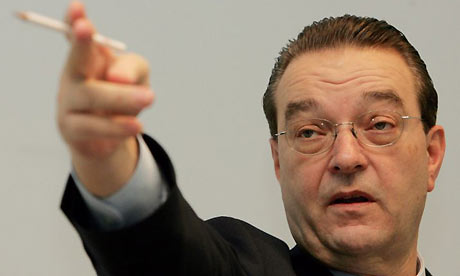
Still buffeted by the financial crisis, UBS AG's move to boost its capital base underlines its continuing struggles to return to profitability even as its competitors are minting money.
The bank raised 3.8 billion Swiss francs ($3.5 billion) late last week by placing 293 million shares, or 8.4% of its capital, with a few investment institutions. It marked the fourth time in less than two years that UBS shareholders have suffered a dilution of their holdings.
At the same time, the bank announced it would post a loss for the second quarter and said customers continued to pull money from its flagship wealth-management business.
The announcement emphasized the hill the bank's new boss, Oswald Grübel, a former top banker with rival Credit Suisse Group AG who took over in February, must still climb to turn around the bank.
Many of UBS's high-net-worth customers have been scared off by the bank's dispute with the U.S. Internal Revenue Service, which wants it to hand over details of 52,000 accounts. A civil trial over that demand is scheduled to start July 13 in a federal court in Miami unless a settlement is reached.
The share placement appears to have been pressed upon the bank by the Swiss authorities, concerned about further deterioration in borrower creditworthiness in the face of recession, analysts said.
The Swiss government "wants to see higher capital levels so that banks can absorb losses because Switzerland would struggle to do so," said David Williams, an analyst at Fox-Pitt Kelton. Swiss bank assets are equal to more than six times Swiss gross domestic product.
UBS took pains to highlight that it isn't raising capital due to one isolated, negative event, but instead to "take advantage of current market opportunities."
The bank raised 3.8 billion Swiss francs ($3.5 billion) late last week by placing 293 million shares, or 8.4% of its capital, with a few investment institutions. It marked the fourth time in less than two years that UBS shareholders have suffered a dilution of their holdings.
At the same time, the bank announced it would post a loss for the second quarter and said customers continued to pull money from its flagship wealth-management business.
The announcement emphasized the hill the bank's new boss, Oswald Grübel, a former top banker with rival Credit Suisse Group AG who took over in February, must still climb to turn around the bank.
Many of UBS's high-net-worth customers have been scared off by the bank's dispute with the U.S. Internal Revenue Service, which wants it to hand over details of 52,000 accounts. A civil trial over that demand is scheduled to start July 13 in a federal court in Miami unless a settlement is reached.
The share placement appears to have been pressed upon the bank by the Swiss authorities, concerned about further deterioration in borrower creditworthiness in the face of recession, analysts said.
The Swiss government "wants to see higher capital levels so that banks can absorb losses because Switzerland would struggle to do so," said David Williams, an analyst at Fox-Pitt Kelton. Swiss bank assets are equal to more than six times Swiss gross domestic product.
UBS took pains to highlight that it isn't raising capital due to one isolated, negative event, but instead to "take advantage of current market opportunities."
Subscribe to:
Posts (Atom)